
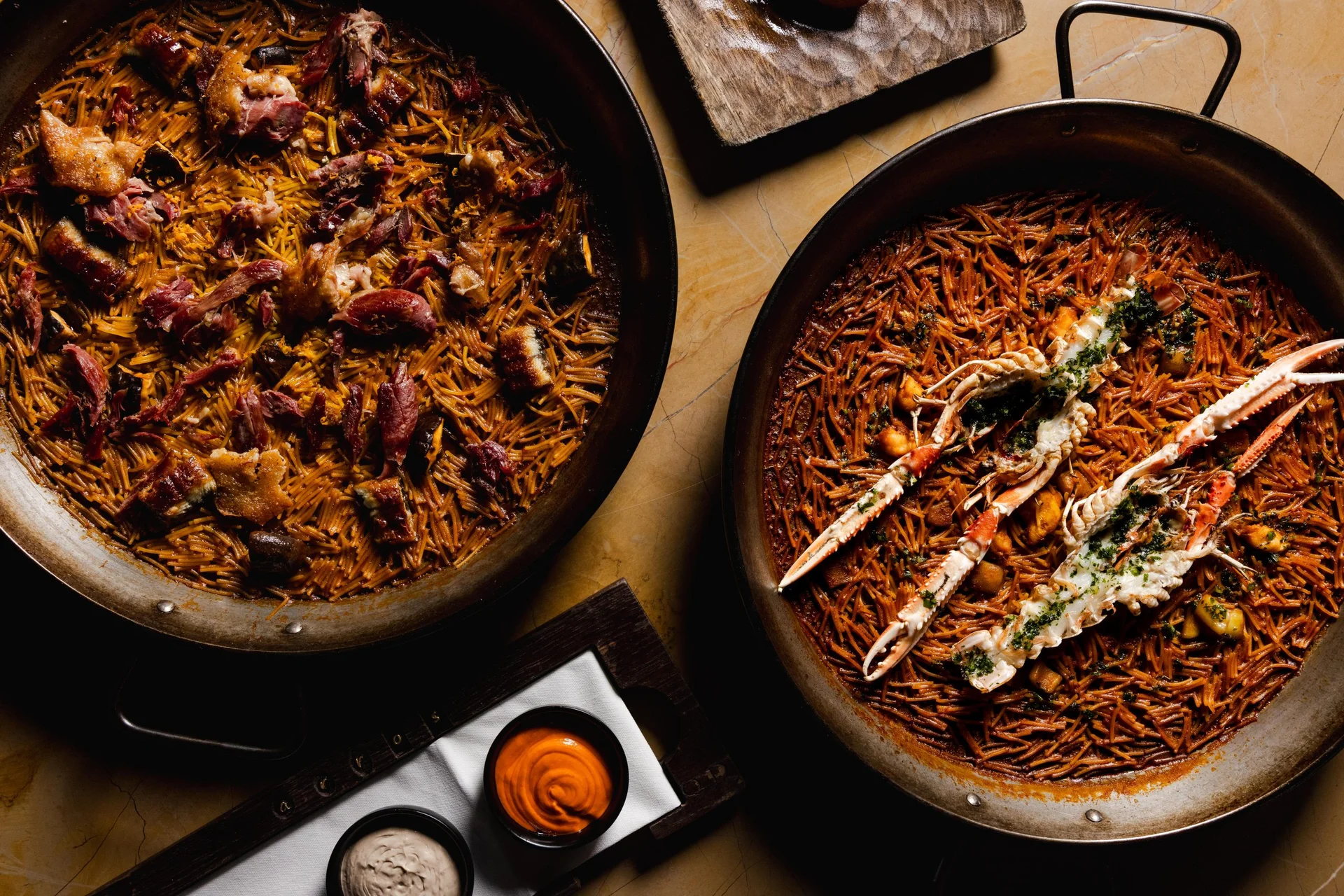
What is paella?
Paella is not just "Spanish rice." It's a centuries-old dish born in the rice fields of Valencia, cooked over open flame in wide, shallow pans, and steeped in regional pride and tradition.
The name comes from the Valencian word paellera: the wide, flat pan used to cook the dish. Originally a humble meal prepared by farm workers using whatever ingredients were at hand (rabbit, snails, beans from the field), paella has evolved into Spain's most celebrated culinary export.
But despite its global fame, authentic paella remains fiercely protected by Valencians, who insist there are only three true versions, and none of them contain chorizo.
The three authentic paellas
According to Valencian tradition, there are only three true paellas. Everything else is "rice with things."
Paella Valenciana
Rabbit, chicken, green beans (ferradura), butter beans (garrofó), tomato, saffron, and rosemary. Cooked over open flame until the rice is tender and the socarrat forms. This is the paella, the one Valencians fiercely protect.
Paella de Marisco
Prawns, mussels, squid, and sometimes clams, cooked in a rich seafood stock with saffron and garlic. Popular along the coast, this version swaps land for sea but maintains the same technique and reverence for the socarrat.
Paella Mixta
A combination of meat and seafood — chicken, prawns, mussels, chorizo (sometimes). Purists scoff at mixta, calling it a tourist invention, but it's widely enjoyed across Spain and beyond. Just don't call it traditional.
What paella is NOT
❌ "Paella has chorizo"
The most famous paella myth: traditional Valencian paella never contains chorizo. The bright red, paprika-heavy sausage overwhelms the delicate saffron flavour and turns the rice an unappetising orange. If you see chorizo, you're eating tourist paella.
❌ "Paella is like risotto"
Paella and risotto are fundamentally different. Risotto uses Arborio rice and requires constant stirring to release starch and create a creamy texture. Paella uses Bomba or Senia rice, is never stirred, and the grains remain firm and separate: different rice, different technique, different result.
❌ "You stir paella"
Once the rice and stock are added, you never stir paella. Stirring breaks the rice and prevents the socarrat (the prized crispy bottom layer) from forming. The pan stays still over the flame, allowing the bottom to caramelise while the top cooks through with steam.
The rice makes the difference
The single most important ingredient in paella is the rice. Spanish short-grain varieties (Bomba, Senia, or Bahía) are essential. These rices have a unique structure that allows them to absorb up to three times their volume in liquid without becoming mushy or sticky.
Bomba rice, the gold standard, maintains its firm texture even when fully cooked. Each grain remains separate, giving paella its characteristic bite. Italian Arborio rice (designed to release starch and create creaminess in risotto) will turn your paella into porridge.
If you can't find Spanish paella rice, don't make paella. Use the wrong rice and you're making "rice with things," not paella.
The socarrat: paella's crispy bottom
The socarrat is the layer of rice that sticks to the bottom of the pan and caramelises into a golden, crackling crust. It's the mark of a properly cooked paella and the most fought-over portion at the table.
Achieving socarrat requires precise heat control. Once the rice has absorbed the stock and is nearly cooked, the heat is increased for the final 2-3 minutes. You'll hear a faint crackling sound as the bottom layer toasts. The smell shifts from savoury to slightly nutty and smoky. That's your cue.
Too little heat and the rice stays soft. Too much and it burns. The perfect socarrat is crispy, deeply golden, and carries a whisper of smoke: the signature of paella cooked over open flame.
Why traditional paella is cooked over wood
Paella was born over open fire in the Valencian countryside, where farm workers cooked rice in wide pans balanced over burning orange wood. The intense, uneven heat from wood fire creates pockets of caramelisation, slight smokiness, and a socarrat that gas burners can't replicate.
Modern restaurants often use gas for consistency and control, but the best paella still comes from wood. The smoke infuses the rice with subtle complexity, and the flickering flame adds theatre to the cooking process.
At Arros QD, we cook paella over a six-metre wood-fire stove designed by Lázaro Rosa-Violán: the beating heart of the restaurant. Orange wood, open flame, and the technique passed down through generations of Valencian cooks.
Frequently asked questions
What rice is used in paella?
Authentic paella uses Spanish short-grain rice, typically Bomba or Senia varieties. Unlike Italian Arborio rice used in risotto, Spanish paella rice absorbs liquid without becoming creamy or sticky, maintaining a firm texture even when fully cooked.
What's the difference between paella and risotto?
Paella and risotto are fundamentally different. Paella uses short-grain Spanish rice that stays firm and separate, is never stirred during cooking, and develops a crispy bottom layer (socarrat). Risotto uses Arborio rice, requires constant stirring, and creates a creamy, almost porridge-like consistency.
What is the socarrat?
Socarrat is the prized crispy, caramelised layer of rice that forms on the bottom of the paella pan. It's achieved by cooking over high heat in the final minutes without stirring. A perfect socarrat is crunchy, golden, and slightly smoky — it's the sign of a well-made paella.
Can you make paella without a paella pan?
While you can approximate paella in a wide, shallow pan, a traditional paellera (paella pan) is essential for authentic results. The wide, flat shape ensures even heat distribution and allows the rice to cook in a thin layer, which is crucial for developing the socarrat.
Does authentic paella have chorizo?
No. Traditional Valencian paella never contains chorizo. The myth of chorizo in paella comes from tourist-oriented 'Spanish rice' dishes. Authentic Valencian paella contains rabbit, chicken, green beans, and butter beans — nothing else.
Can you reheat paella?
Paella is best enjoyed fresh, as reheating compromises the texture of the rice and destroys the socarrat. If you must reheat it, use a wide pan over medium heat with a splash of stock, but expect the rice to lose its characteristic firmness.
Valencian paella in London
Cooked over wood fire by chefs trained in Valencia. Book a table, join a masterclass, or order paella to take home.